Commentary:
OU'S CONTEMPORARY
DANCE OKLAHOMA
WELL WORTH SEEING
PERFORMANCES
TONIGHT AND TOMORROW
By Nancy Condit
The University of Oklahoma's Contemporary Dance Oklahoma gave a performance well worth seeing Friday night. Austin Hartel is the artistic director of Contemporary Dance Oklahoma.
Merce Cunningham's "How to Pass, Kick, Fall and Run" is a dance of solid color-clad dancers -- green, red, and blue t-shirts and black leotards, and great rhythm with prose as music. it was well performed by the dancers, by the orators, Lyn Cramer and Joel Burcham. The dance celebrates would have been Cunningham's 100th birthday. Cunningham was one of the great modern American choreographers.
Austin Hartel's piece, "On the Rim of the Rim (2006) -- Grand Canyon Suite," with music by Ferde Grofe was excellent. The dancers performed several of Hartel's signature moves as -- in couples -- they formed passengers and donkeys riding around the Grand Canyon, and -- in couples again -- balanced on each other's legs. Their moves were very effective performed in leotards and colors of the 80's.
Leslie Kraus' "deck of dogs" was an edgy, stylized dance with the dancers clad in red. It was performed to breathing by the dancers, aggressively turned magazine pages, and "Moon River" sung a capella by one of the dancers. It was great to a contemporary work like this.
Roxanne Lyst's "The Kingdom" was a social commentary piece. The dancers were clad in white, and well received by the audience. The dance performed to "Show Me How to Dance," within "The Kingdom," was enthusiastically received and performed very well.
Contemporary Dance Oklahoma has two more performances, tonight at 8 p.m., Saturday, April 13, and 3 p.m. Sunday, April 14. The performances are in the Elsie C. Brackett Theatre, also known as the Rupel Jones Theatre.










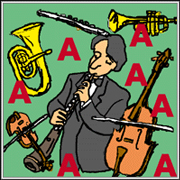 One
reed instrument plays a unique role in the orchestra. It is the first
instrument you typically hear before every philharmonic concert. So you
may know to which instrument the other instruments in the orchestra
tune before a concert, but do you know why? See below for answer.
One
reed instrument plays a unique role in the orchestra. It is the first
instrument you typically hear before every philharmonic concert. So you
may know to which instrument the other instruments in the orchestra
tune before a concert, but do you know why? See below for answer.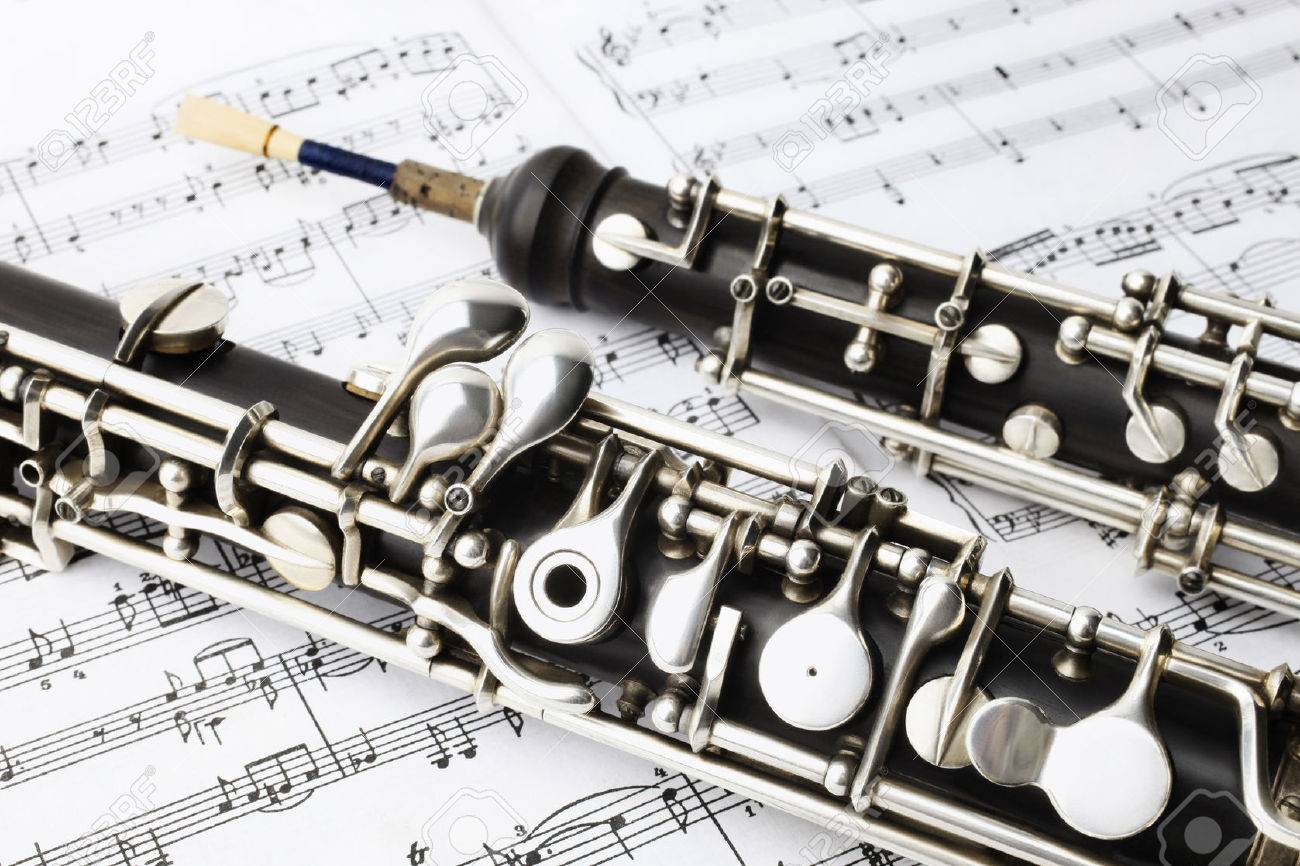 An
orchestra tunes to a precise frequency, usually 440 hertz, known as A
440. The note is first played by the oboist and the rest of the
orchestra tunes accordingly. There are a couple of explanations why the
oboe leads the tuning. First, of all the instruments, the oboe is
least affected by humidity or other weather conditions. In addition,
it is more difficult to adjust the pitch of the oboe, unlike most of the
other instruments, so the other instruments have to match the oboe.
Kind of makes you want to treat this little woodwind with more respect,
doesn’t it?
An
orchestra tunes to a precise frequency, usually 440 hertz, known as A
440. The note is first played by the oboist and the rest of the
orchestra tunes accordingly. There are a couple of explanations why the
oboe leads the tuning. First, of all the instruments, the oboe is
least affected by humidity or other weather conditions. In addition,
it is more difficult to adjust the pitch of the oboe, unlike most of the
other instruments, so the other instruments have to match the oboe.
Kind of makes you want to treat this little woodwind with more respect,
doesn’t it?